When a brand or jeweler orders watch packaging, most of the attention goes to the material, wood, leather, paperboard, and to the print and foil on the lid. The decision that actually shapes cost, protection and the moment the customer opens it is the box’s construction: how it is built and how it opens. A pillow box, a two-piece rigid box, a magnetic book-style box and a drawer box can all carry the same watch and the same logo, but they cost, ship and present very differently. This is a side-by-side look at the main formats so you can match one to your product and price point.
Paperboard pillow boxes: the entry format
The pillow box, a folded paperboard shell with a curved profile and a soft insert inside, is the least expensive way to present a watch and the workhorse of fashion and promotional pieces. Folding paperboard is cheap because it ships and stores flat and assembles quickly, and minimum orders often start around 100 units. Decorated, these land roughly in the $2.50 to $6 range depending on size and print. The trade-off is protection and perceived value: paperboard gives a little under pressure, and the format reads as gift or promotional rather than luxury. For a watch under a couple hundred dollars, a fashion line, or a giveaway at an event, it is usually the right call. Add a soft-touch or linen-look paper and a foam pillow and it climbs toward the top of that range while looking considerably more premium.
Rigid two-piece boxes: the step up
A rigid box uses thick chipboard, typically around 2 millimeters, wrapped in printed paper or leatherette, and it does not fold flat; it ships assembled. That thicker board and the extra wrapping and assembly are exactly why rigid boxes cost more than folding cartons, but they also deliver the solid, weighty feel buyers associate with a real watch purchase. The classic version is a two-piece lift-off lid box; decorated, these commonly run from about $6 to $15 per unit. This is the default for mid-range and premium watches sold at retail, because the box survives handling on a counter and in a bag, and it holds a crisp foil-stamped logo well.
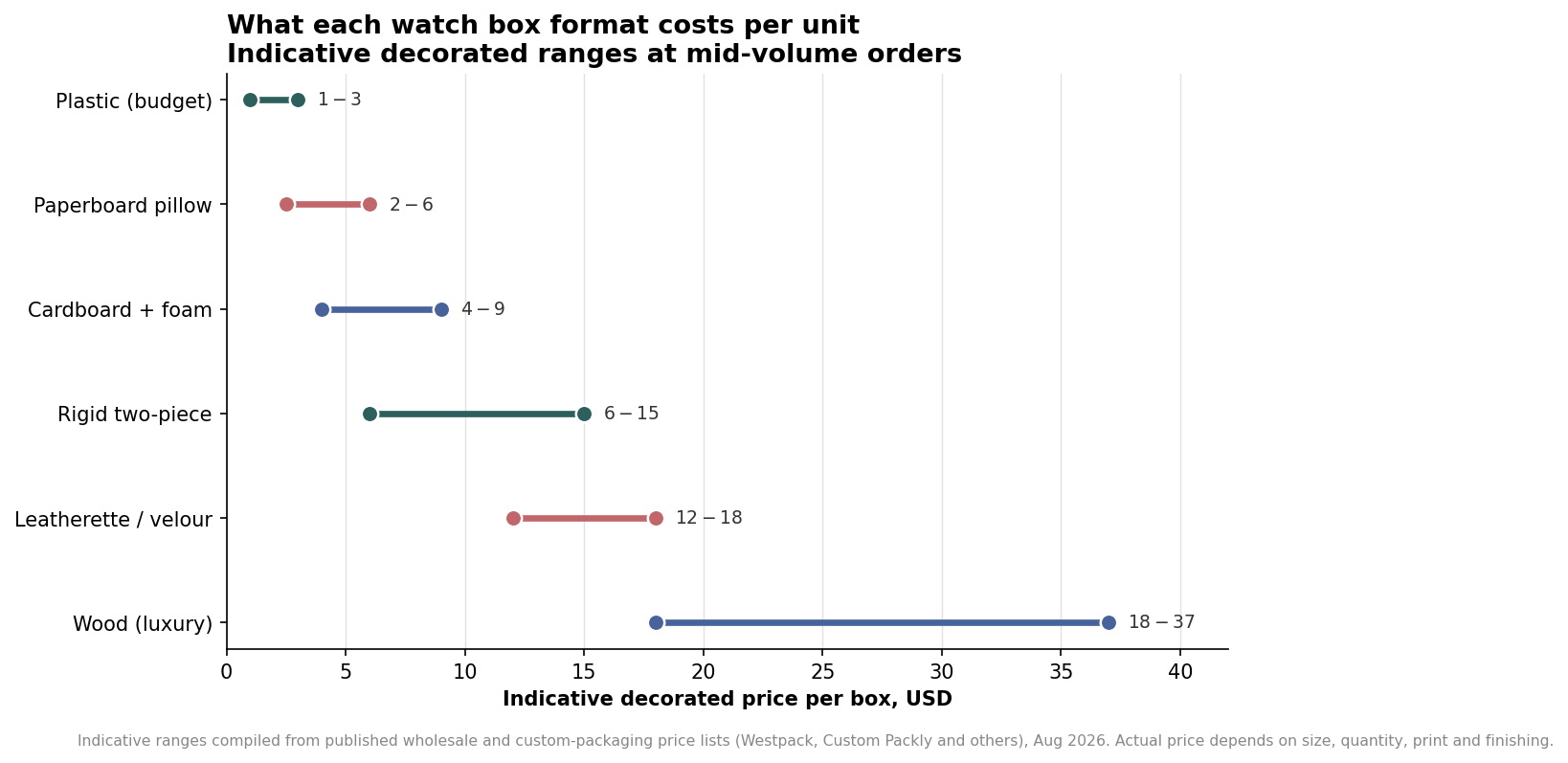
The chart above shows why format, not just material, drives the quote. A plastic shell can undercut everything on price but caps the perceived value; leatherette and wood sit at the top because of both material and the rigid construction underneath them. Most brands find the honest sweet spot in the rigid two-piece or cardboard-and-foam band, where the box feels substantial without pushing unit cost into luxury territory.
Magnetic and drawer boxes: built for the unboxing
If the opening moment is part of the brand, two constructions do it better than a lift-off lid. A magnetic book-style box opens like a cover on a hinge and snaps shut with hidden magnets, which feels deliberate and photographs well for social media and e-commerce. A drawer (or slide) box pulls out from a sleeve, giving a reveal and a snug, rattle-free hold. Both are rigid constructions, so they sit in the same cost neighborhood as, or slightly above, a two-piece rigid box, and both need a bit more engineering, magnet placement or drawer tolerance, which is worth confirming on a physical sample before a full run. For a flagship model or a limited edition, the added few dollars per unit buys a noticeably better first impression.
The insert is doing the real work
Whatever the outer format, the interior decides whether the watch arrives looking perfect. A pillow or cuff insert is the classic presentation choice: the strap wraps around a padded bolster so the watch sits proud and shaped, which is what buyers expect from a watch box. A die-cut foam bed is the more protective option, cradling the case and holding it still in transit, and it suits heavier or sports watches that would flop on a soft pillow. Match the insert to the specific watch: a pillow that is too fat strains a short strap, and a foam cavity cut for a 40mm case leaves a 44mm watch sitting proud of the lid. Send the printer your case diameter, lug-to-lug length and strap type so the insert is cut to fit rather than to a generic template.
How construction and quantity set the price
Two levers move a watch-box quote more than anything else: how the box is built and how many you order. Rigid construction carries a structural premium at every quantity, but because a large share of the cost is one-time setup, tooling for the cutter, dies for foil, the first proof, the per-unit price falls sharply as the run grows and the folding-versus-rigid gap narrows with it.
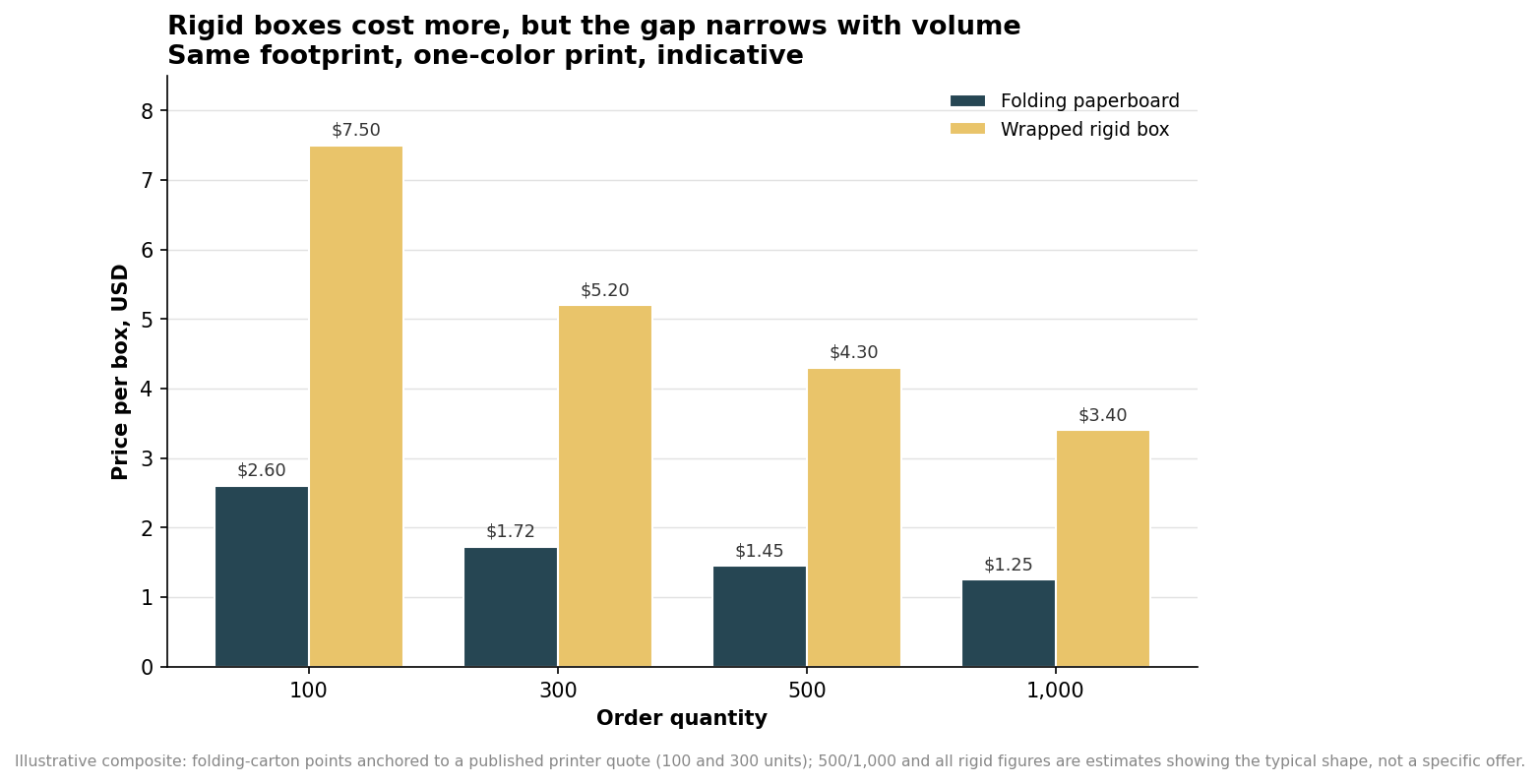
Plan the quantity around that curve rather than around this year’s forecast alone. Folding cartons are viable from about 100 pieces, while custom rigid boxes are most economical in the several-hundred to thousand range, and standard production commonly runs about 8 to 10 business days after art approval, longer for specialty finishes or overseas rigid manufacturing. The figures here are indicative ranges drawn from current packaging price lists, not a specific quote, so use them to shortlist a format and then get real numbers for your exact size, print and finish. As a rule, pick the least expensive construction that still matches the price point of the watch inside; a $3 pillow box under a $2,000 watch undersells it, and a $30 wood box under a $150 fashion watch eats the margin.